


Description
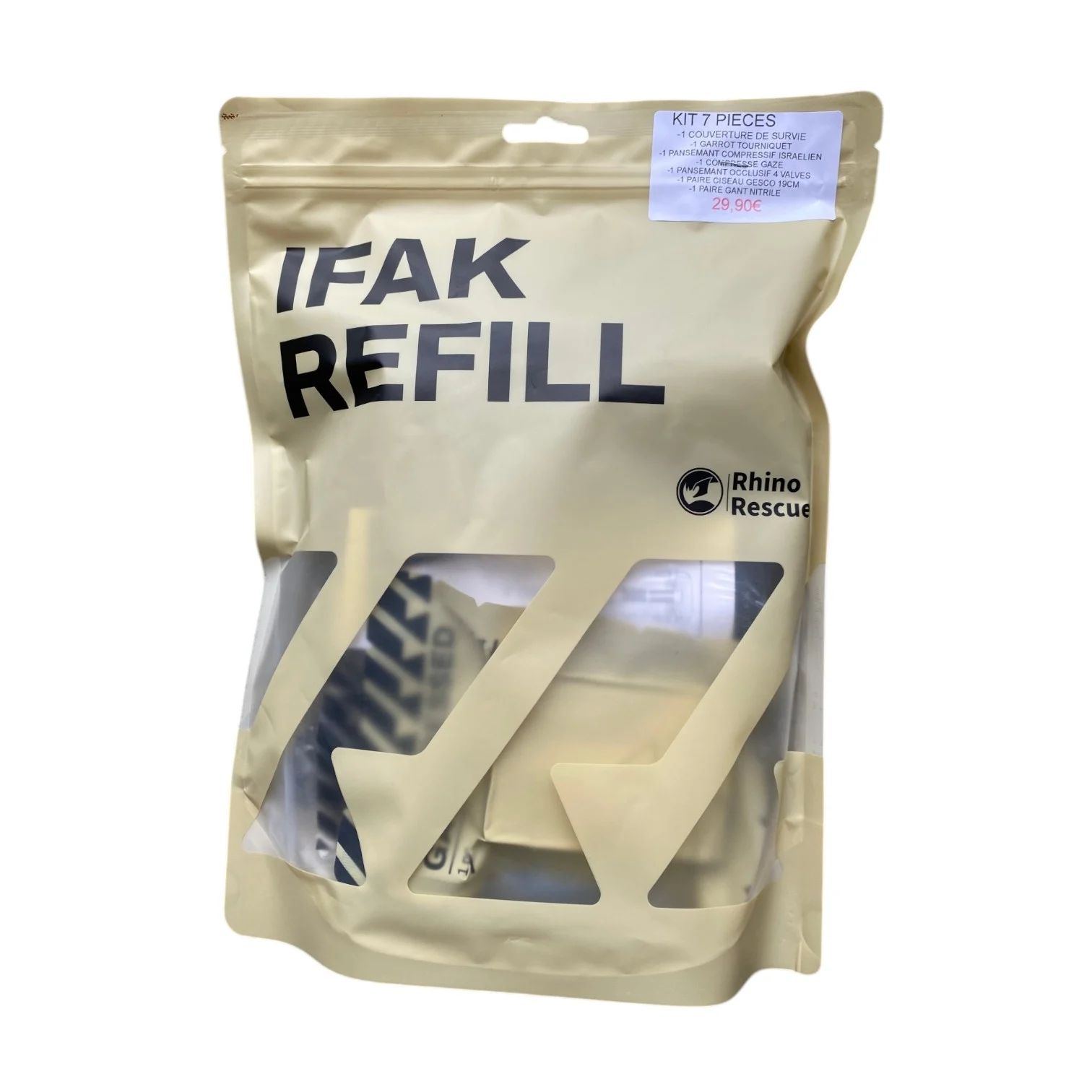
IFAK compact first aid kit: Rhino Rescue tactical first aid kit
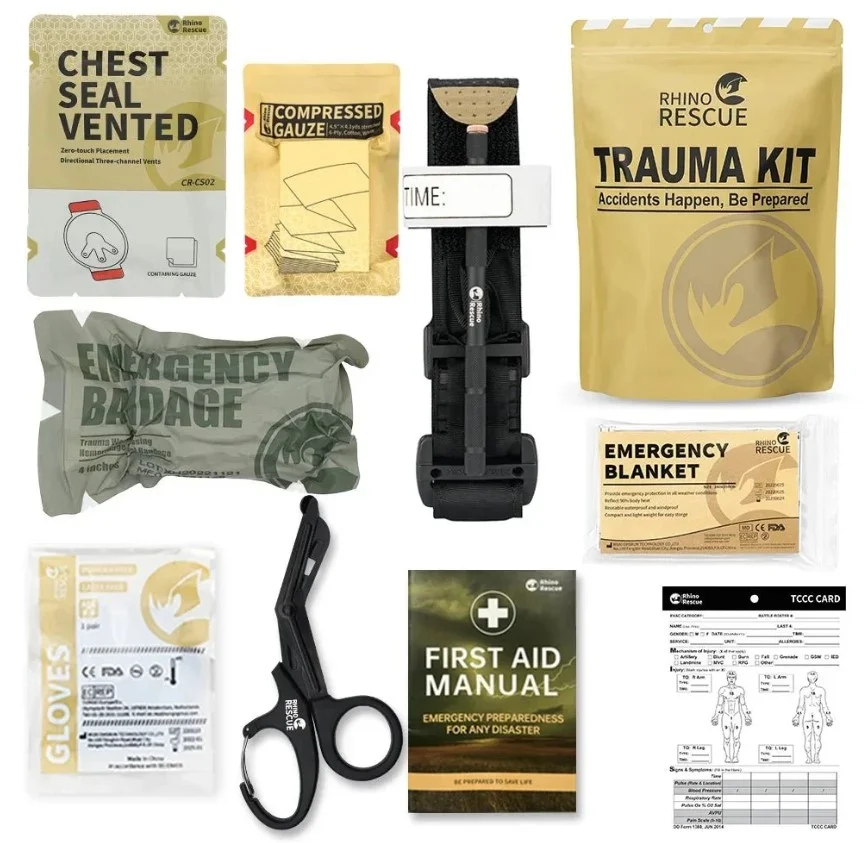
This IFAK Rhino Rescue first aid kit comprises seven components focused on trauma priorities: stopping bleeding, protecting open wounds and maintaining vital functions. It is designed to recharge an existing individual emergency kit or complement personal tactical equipment.
Its compact size means it can fit into a backpack, MOLLE vest or vehicle glovebox. In practice, the compact format is not achieved at the expense of content: each item on the list responds to a precise injury scenario.
Contents of the IFAK Rhino Rescue kit: 7 emergency components
- 1 × Rhino Rescue tourniquet: rapid control of severe extremity bleeding, with torsion rod clamp.
- 1 × Compressive pad: secure contention and coverage of wounds to control diffuse bleeding.
- 1 × Emergency dressing: rapid application to open trauma or deep wounds.
- 1 × Thoracic dressing: treatment of penetrating chest wounds, designed to prevent tension pneumothorax.
- 1 × Survival blanket: limits heat loss and helps stabilize the patient while awaiting medical attention.
- 1 × Medical scissors: cut clothing, bandages and plasters under duress, without risk to the victim.
- 1 × Pair of gloves: hygienic barrier for the operator during treatment.
Who is this IFAK tactical first-aid kit for?
This 7-piece kit is designed for profiles that can’t carry a bulky kit. The difference lies in the selection: no superfluous components, each item covers a lesion documented as a priority in TCCC (Tactical Combat Casualty Care) protocols.
- Military and law enforcement personnel on patrol or tactical operations
- Rescue teams and first-aiders in emergency response
- Mountaineers, hikers and sports enthusiasts in isolated environments
- Motorists who want a compact kit to fit in their vehicle
- Professionals on extended business trips requiring additional medical equipment
Reliability and robustness of the IFAK Rhino Rescue kit
Each item has been selected according to precise medical and tactical criteria. The content covers the three most frequent immediate vital risks in trauma situations: external hemorrhage, penetrating chest injury, secondary hypothermia.
Choose if you’re putting together a lightweight individual kit for a MARCH (Massive hemorrhage, Airway, Respiration, Circulation, Hypothermia) intervention. To be completed with an airway management device if required by the operational context.